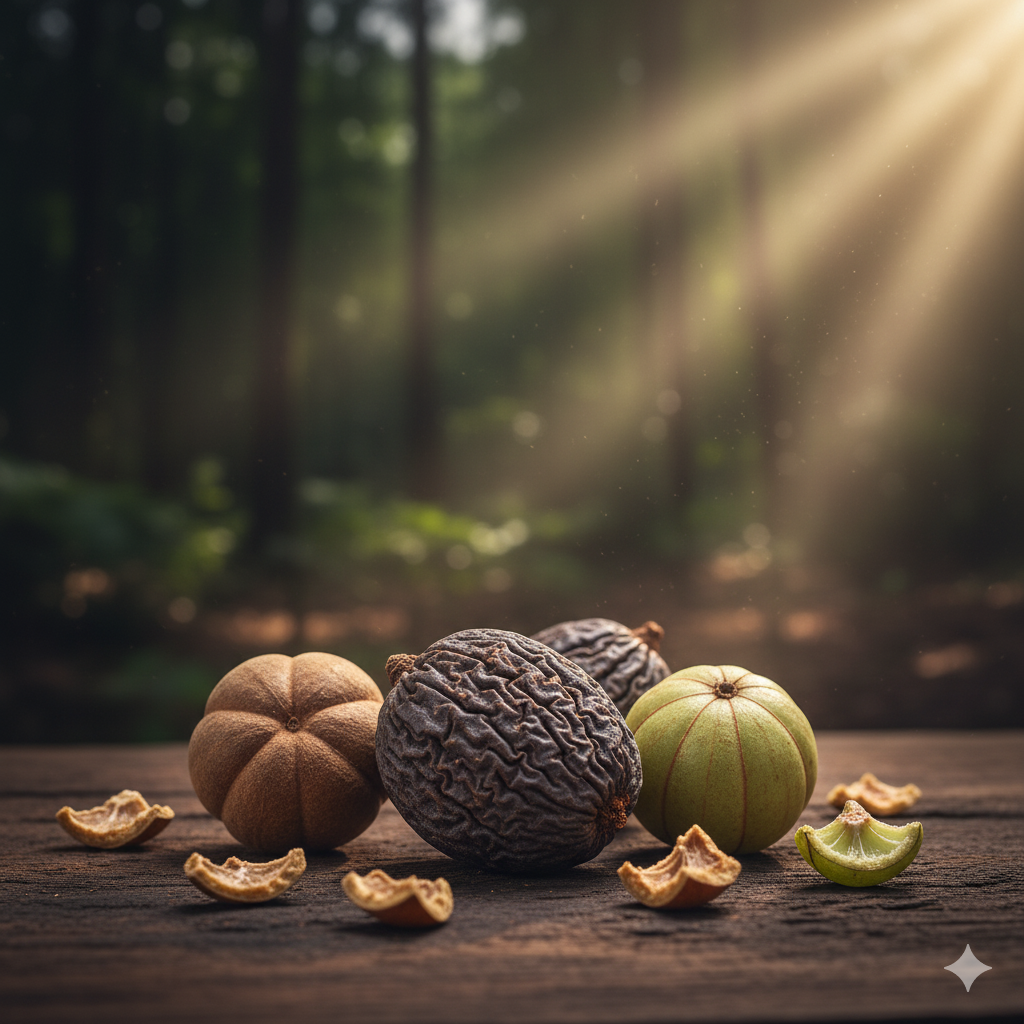
Manjistha (Indian Madder)
Blood-purifying herb for skin health, complexion, detoxification, and lymphatic support.
Overview
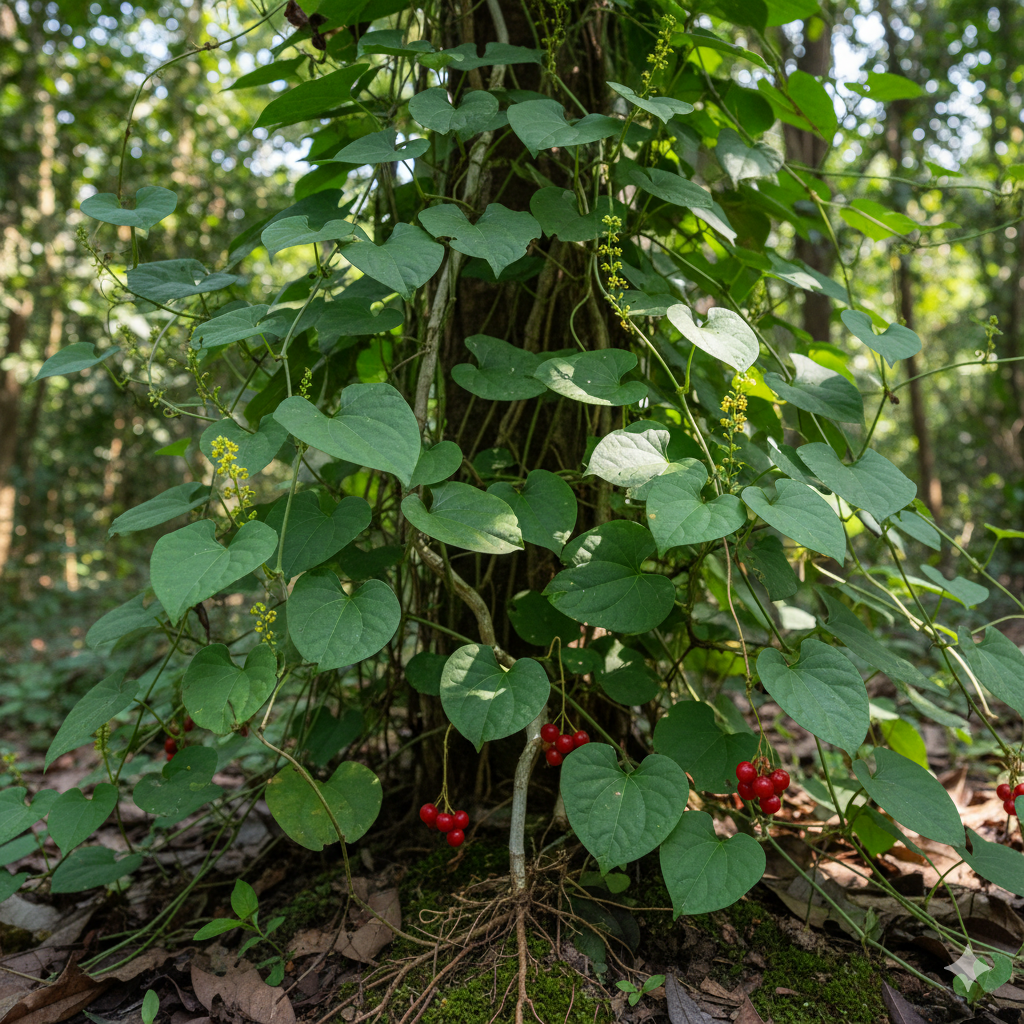
Manjistha (Rubia cordifolia), also known as Indian Madder, is one of Ayurveda's premier herbs for skin health and blood purification. The root has been used for over 3,000 years as a natural dye producing vibrant red color and, more importantly, as a powerful medicinal herb. In Ayurveda, it is renowned as the best herb for rakta shodhana (blood purification) and varnya (complexion enhancement).
The root is the medicinal part, typically used dried and powdered. Manjistha primarily pacifies Pitta and Kapha doshas while gently supporting Vata. Its bitter (tikta), sweet (madhura), and astringent (kashaya) tastes combined with cooling (sheeta) properties make it ideal for inflammatory skin conditions and blood disorders.
Therapeutic Uses
Manjistha's primary application is skin health. It treats a wide spectrum of dermatological conditions including acne, eczema, psoriasis, pigmentation disorders, and chronic skin inflammations. The herb works both internally by purifying blood and externally when applied topically. Its anti-inflammatory and antimicrobial properties reduce infection and inflammation while promoting healing.
For hyperpigmentation and uneven skin tone, Manjistha is unparalleled in Ayurvedic dermatology. It inhibits melanin production and promotes even complexion. Traditional use as a beautifying herb is validated by research showing tyrosinase inhibition (the enzyme involved in melanin synthesis). Women have used Manjistha for centuries to achieve clear, radiant skin.
The blood-purifying (rakta shodhaka) properties extend beyond skin. Manjistha supports lymphatic drainage and helps clear accumulated toxins from the blood and lymph. This benefits systemic health, including immune function and inflammation reduction. The herb's cooling nature makes it valuable for blood-heat conditions—a concept in Ayurveda describing inflammatory blood conditions.
Manjistha demonstrates hepatoprotective properties, supporting liver detoxification and protecting against hepatotoxins. The herb increases antioxidant enzymes in the liver and promotes bile flow. This supports the liver's role in blood filtration and toxin elimination.
For women's health, Manjistha regulates menstrual flow and treats menstrual disorders characterized by heavy bleeding or irregularity. Its astringent properties help normalize bleeding while the cooling action reduces inflammatory pain. The herb is also used traditionally to support uterine health.
How to Use
Powder: Take 1/4 to 1 teaspoon (1-3 grams) of Manjistha root powder with warm water, honey, or ghee twice daily. For skin conditions, consistent internal use is key.
Decoction: Boil 1 teaspoon of Manjistha powder or root pieces in 2 cups water, reduce to 1 cup. Drink 1/2 cup twice daily for blood purification and skin health.
Face Mask: Mix Manjistha powder with water, yogurt, or honey to create a paste. Apply to face, leave for 15-20 minutes, then rinse. Use 2-3 times weekly for pigmentation and complexion enhancement.
Topical Paste: For localized skin conditions, make a paste with Manjistha powder and water or neem oil. Apply to affected areas.
Combination Formula: Often combined with other blood-purifying herbs like Neem, Turmeric, or Sariva for enhanced skin benefits.
Oil Infusion: Manjistha-infused oils are used for skin massage and to improve complexion. Can be prepared traditionally or purchased.
Dosage
- Powder: 1-3 grams daily
- Decoction: 1/2 cup twice daily
- Topical applications: As needed, 2-3 times weekly
- Tincture (1:3): 2-4 ml, 2-3 times daily
For skin conditions, benefits typically appear after 4-8 weeks of consistent use. For acute conditions, use for 1-2 months; for chronic skin issues, 3-6 months with professional guidance. External application can be ongoing as tolerated.
Contraindications
While generally safe, Manjistha requires certain precautions. Pregnant women should avoid Manjistha in early pregnancy due to its blood-moving properties and potential uterine stimulation. Use in late pregnancy or postpartum should be under qualified guidance.
Those with kidney stones should exercise caution, as Manjistha contains calcium oxalate. While not conclusively contraindicated, monitoring is advisable with pre-existing kidney conditions.
The herb may interact with diuretic medications due to its own mild diuretic properties. Those on such medications should consult healthcare providers before use.
Manjistha may temporarily discolor urine, stools, sweat, and breast milk red or pink due to its natural pigments. This is harmless but can be alarming if unexpected. The effect is reversible upon discontinuation.
Some individuals may experience mild gastrointestinal upset initially. Starting with lower doses and gradually increasing usually prevents this. Rare allergic reactions may occur; discontinue if signs of allergy appear.
Research and Evidence
Scientific research on Manjistha has expanded significantly in recent years. Studies confirm its traditional use for skin conditions, with demonstrated anti-inflammatory, antimicrobial, and antioxidant properties. The compound purpurin shows particular promise for skin health.
Research on pigmentation disorders shows Manjistha inhibits tyrosinase activity, the rate-limiting enzyme in melanin production. A 2018 study demonstrated significant reduction in hyperpigmentation with topical Manjistha application over 8 weeks.
Antimicrobial activity has been confirmed against various skin pathogens including Staphylococcus aureus, Streptococcus species, and Propionibacterium acnes (acne-causing bacteria). This validates traditional use for infectious skin conditions.
The hepatoprotective effects have been studied in animal models, showing protection against chemical-induced liver damage. Manjistha increases glutathione, superoxide dismutase, and catalase—key antioxidant enzymes in the liver.
Lymphatic and blood-purifying effects, while traditionally recognized, require more clinical validation. Preliminary research suggests immune-modulating effects through enhanced lymphocyte function and cytokine regulation.
Safety studies indicate low toxicity at therapeutic doses. No significant adverse effects were reported in clinical trials. The main considerations involve contraindications rather than direct toxicity. Long-term use studies (up to 6 months) show sustained benefits for chronic skin conditions without tolerance development.
Frequently Asked Questions
What is Manjistha good for?
Manjistha is excellent for skin conditions (acne, eczema, psoriasis, hyperpigmentation), blood purification, lymphatic drainage, complexion enhancement, liver detoxification, and women's menstrual health. It's Ayurveda's premier herb for skin and blood health.
Can Manjistha lighten skin pigmentation?
Yes, Manjistha is highly effective for hyperpigmentation. It inhibits melanin production (tyrosinase enzyme) and promotes even skin tone. Use internally (1-3g daily) and externally as face mask. Results typically visible after 4-8 weeks of consistent use.
How long does it take for Manjistha to work?
For skin conditions, benefits typically appear after 4-8 weeks of consistent internal use. Topical applications may show faster results. For best outcomes with chronic skin issues, use for 3-6 months with professional guidance.
Does Manjistha have side effects?
Manjistha is generally safe. May temporarily discolor urine, stools, sweat, and breast milk red/pink due to natural pigments (harmless and reversible). Pregnant women should avoid in early pregnancy. Those with kidney stones should use cautiously. Start with low doses.