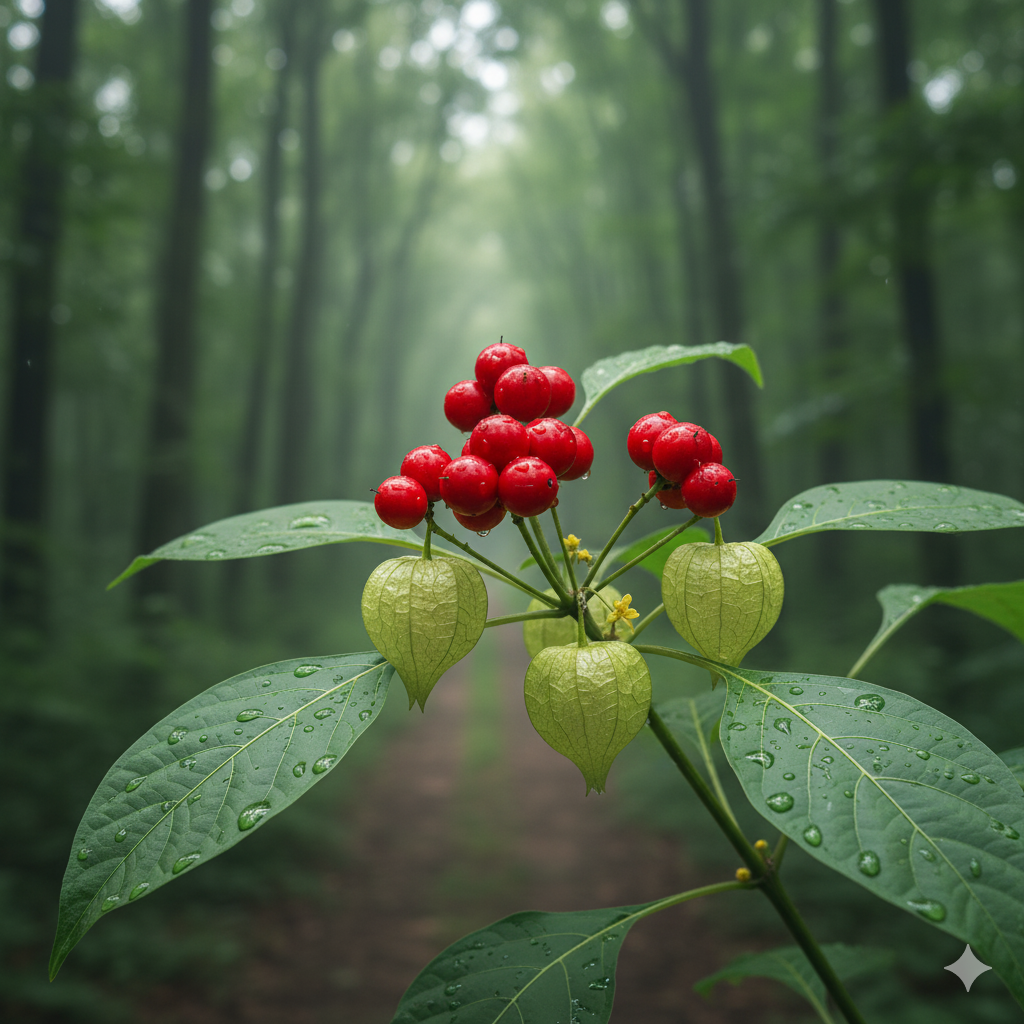
Shankhpushpi (Convolvulus)
Premier Ayurvedic brain tonic for memory, learning, and mental clarity.
Overview
Shankhpushpi (Convolvulus pluricaulis) is Ayurveda's premier Medhya Rasayana (brain rejuvenative) alongside Brahmi. The entire plant is medicinal, with the flowering herb being most potent. Used for over 3,000 years to enhance intellect, memory, and mental clarity, Shankhpushpi is considered one of the most powerful nervine tonics. It primarily balances all three doshas with special affinity for calming Pitta and Vata in the mind.
The name Shankhpushpi refers to the conch shell-shaped flowers. In Ayurvedic texts, it's praised for promoting Buddhi (intellect), Medha (retention), and Smriti (memory). Unlike stimulants, Shankhpushpi calms the mind while enhancing cognitive function—a unique combination.
Therapeutic Uses
Shankhpushpi's primary application is cognitive enhancement. Research demonstrates significant improvements in learning capacity, memory retention, and recall. The herb enhances neurotransmitter function, particularly acetylcholine, which is crucial for memory formation. Students, professionals, and elderly individuals benefit from regular use. Effects are cumulative, with optimal benefits appearing after 4-8 weeks.
As a nervine tonic, Shankhpushpi reduces anxiety and mental stress without causing sedation. It provides a calm, focused mental state—ideal for studying, meditation, or stressful situations. Clinical studies show reduced anxiety scores comparable to pharmaceutical anxiolytics but without side effects. The adaptogenic properties help the brain cope with stress while maintaining clarity.
For insomnia, particularly when caused by mental overactivity, Shankhpushpi promotes restful sleep. It calms racing thoughts and reduces the time to fall asleep. Unlike sedatives, it doesn't cause morning grogginess but rather improves mental freshness upon waking.
Shankhpushpi demonstrates neuroprotective properties, protecting brain cells from oxidative damage and age-related decline. Research shows potential for neurodegenerative diseases like Alzheimer's and Parkinson's. The herb reduces beta-amyloid plaque formation and protects neurons from various toxins.
For children, Shankhpushpi supports healthy brain development and improves academic performance. Traditional use for childhood learning difficulties is supported by studies showing improved attention span and learning capacity. It's gentle enough for long-term use in growing children.
The herb benefits mental disorders including depression and ADHD. Its mood-stabilizing effects reduce depressive symptoms while the calming properties help hyperactivity. Some practitioners use it as adjunct therapy in psychiatric conditions under supervision.
How to Use
Powder: 3-6 grams of dried Shankhpushpi powder twice daily with milk, ghee, and honey. Milk enhances absorption of the herb's brain-nourishing properties. Best taken morning and evening.
Fresh Juice: 10-20 ml of fresh plant juice with honey is the most potent form but less commonly available. Traditional texts prize the fresh juice for acute mental fatigue.
Decoction: Boil 5-10 grams herb in 2 cups water, reduce to 1 cup. Consume 1/2 cup twice daily for sustained cognitive benefits.
Syrup: Shankhpushpi syrup (commercially available) is convenient, especially for children. Follow package directions, typically 5-10 ml twice daily.
Tablets/Capsules: Standardized extract tablets provide 500-1000 mg per dose, taken 1-2 times daily.
Combinations: Synergizes beautifully with Brahmi for enhanced cognitive effects. Combined with Ashwagandha for stress-related cognitive decline. With Jyotishmati for severe mental fatigue.
Dosage
- Powder: 3-6 grams daily in divided doses
- Fresh juice: 10-20 ml daily with honey
- Decoction: 1/2 cup twice daily
- Syrup: 10-20 ml twice daily
- Tablets: 500-1000 mg, 1-2 times daily
For cognitive enhancement, consistent use for minimum 8-12 weeks recommended. For anxiety relief, benefits may appear within 2-4 weeks. As a Medhya Rasayana, can be used long-term with periodic breaks (3 months on, 2 weeks off).
Contraindications
Shankhpushpi is remarkably safe with minimal contraindications. Pregnant and breastfeeding women should consult practitioners before use, though traditional practice includes it for mental health during these periods under guidance.
Those with hypothyroidism should use cautiously as Shankhpushpi may affect thyroid function, though evidence is limited. Regular monitoring is advisable if using long-term.
May potentiate sedative medications. Those on benzodiazepines, barbiturates, or sleep medications should use under medical supervision. Dosage adjustments of medications may be necessary.
Rarely, mild digestive upset occurs. Taking with food or milk usually prevents this. Some individuals experience increased drowsiness initially; if so, avoid operating machinery until adapted.
Those with severe depression should use as adjunct therapy under professional care, not as sole treatment. Shankhpushpi supports mental health but doesn't replace psychiatric care for serious conditions.
Research and Evidence
Scientific research increasingly validates Shankhpushpi's traditional uses. A 2012 study published in Pharmacognosy Reviews comprehensively documented its neuroprotective, anxiolytic, and cognitive-enhancing properties. Multiple animal studies demonstrate improved learning, memory consolidation, and reduced anxiety behaviors.
The mechanisms involve enhanced acetylcholinesterase inhibition (increasing acetylcholine availability), antioxidant neuroprotection, and modulation of GABA and serotonin pathways. These explain both the cognitive enhancement and anxiety reduction.
Human clinical trials, while fewer than animal studies, show promising results. A 2016 study found significant improvements in memory scores and reduced anxiety in elderly subjects after 12 weeks of Shankhpushpi supplementation. Children with learning difficulties showed improved academic performance in preliminary trials.
Neuroprotective research demonstrates reduced oxidative stress markers in brain tissue, protection against various neurotoxins, and reduced inflammation. These properties suggest potential for neurodegenerative disease prevention, though more human research is needed.
Safety studies indicate excellent tolerability. No serious adverse events have been reported in traditional use or modern clinical trials at recommended doses. Long-term safety appears favorable based on centuries of use and modern studies up to 6 months duration.
The active compounds include flavonoids, alkaloids, glycosides, and coumarins that collectively contribute to therapeutic effects. Unlike single-compound drugs, the whole herb provides synergistic benefits with better safety profile.
Frequently Asked Questions
What is Shankhpushpi used for?
Shankhpushpi is used for memory enhancement, learning capacity improvement, anxiety and stress reduction, insomnia (from mental overactivity), neuroprotection, supporting children's brain development, and as adjunct therapy for depression and ADHD.
Does Shankhpushpi improve memory?
Yes, Shankhpushpi significantly improves learning capacity, memory retention, and recall. It enhances acetylcholine (key memory neurotransmitter) and provides neuroprotection. Optimal benefits appear after 8-12 weeks of consistent use at 3-6g daily.
Can I take Shankhpushpi for anxiety?
Yes, Shankhpushpi is excellent for anxiety. It reduces stress and mental anxiety without causing sedation, providing calm focused mental state. Studies show reduced anxiety scores comparable to pharmaceutical anxiolytics but without side effects. Benefits may appear within 2-4 weeks.
Is Shankhpushpi safe for children?
Yes, Shankhpushpi is traditionally used for children to support brain development and improve academic performance. It's gentle enough for long-term use. Studies show improved attention span and learning capacity in children with learning difficulties. Use under qualified guidance for proper dosing.