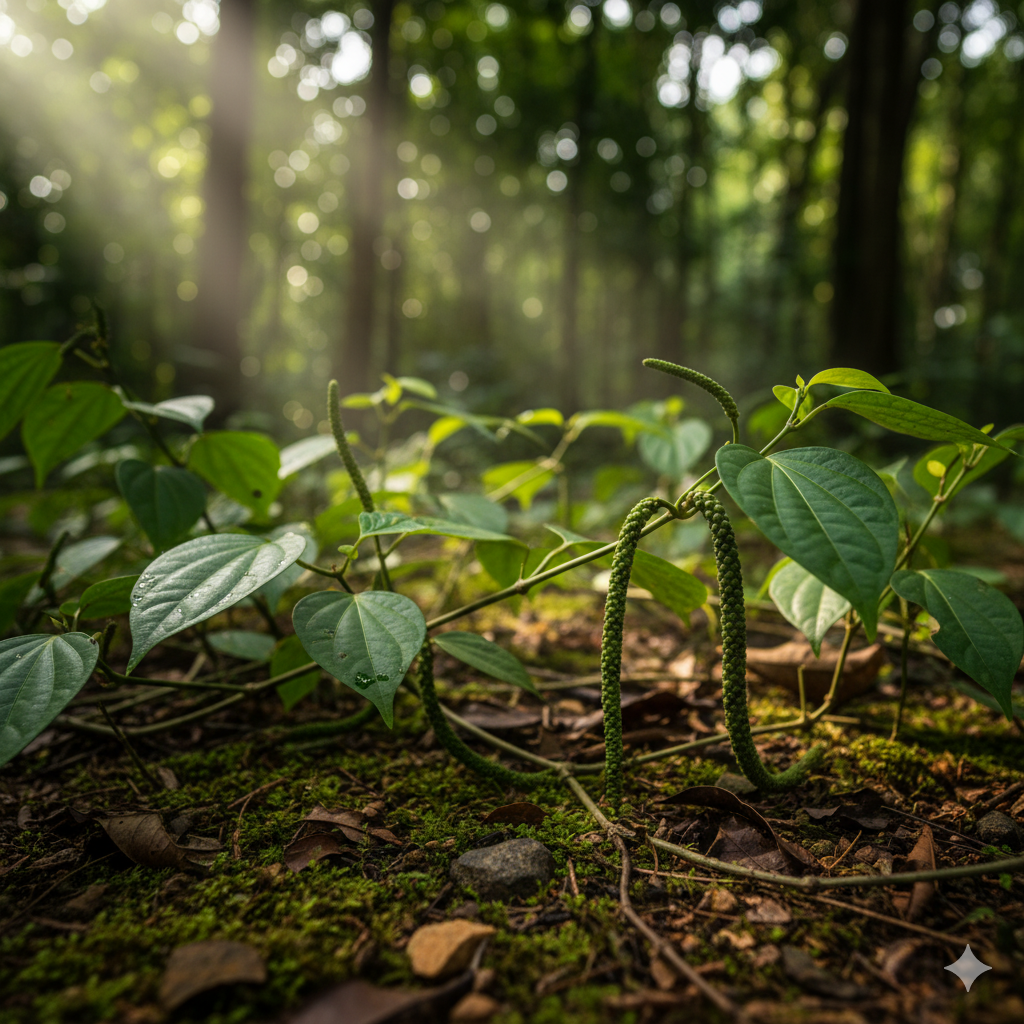
Haritaki (Chebulic Myrobalan)
King of herbs for digestion, detoxification, respiratory health, and rejuvenation.
Overview
Haritaki (Terminalia chebula), often called the "King of Medicines" in Ayurveda, is revered for its remarkable therapeutic versatility. The name Haritaki derives from "Harita," referring to Lord Shiva's green color, reflecting the herb's divine status. It is one of the three fruits in Triphala and considered the most important component. Buddha is often depicted holding Haritaki, symbolizing its role in healing and enlightenment.
The fruit is the medicinal part, used dried and typically powdered. Haritaki balances all three doshas, making it tridoshic. It possesses five of the six tastes—all except salty—with sour (amla) predominating. This unique taste profile contributes to its wide-ranging therapeutic actions. The herb is classified as a powerful Rasayana promoting longevity and vitality.
Therapeutic Uses
Haritaki is foremost a digestive herb and gentle laxative. Unlike stimulant laxatives, it strengthens and tones intestinal walls while promoting regular elimination. It enhances digestive fire (agni) without causing irritation and improves nutrient absorption. The herb is effective for both constipation and loose stools, demonstrating a normalizing effect on bowel function. It also expels intestinal parasites and pathogenic bacteria.
For respiratory health, Haritaki is a powerful expectorant and bronchodilator. It loosens and expels mucus, particularly beneficial for chronic cough, asthma, and bronchitis. The herb's antimicrobial properties help clear respiratory infections. Traditional texts describe Haritaki as excellent for voice improvement and throat health—singers and speakers have used it for centuries.
As a Rasayana, Haritaki promotes longevity and rejuvenation. It has profound antioxidant properties, protecting cells from free radical damage. The herb supports healthy aging, cognitive function, and vitality. Research shows neuroprotective effects with potential benefits for memory and mental clarity. Buddhist tradition associates Haritaki with wisdom and consciousness expansion.
Haritaki demonstrates significant antimicrobial and antiviral activity. It inhibits various pathogenic bacteria, fungi, and viruses. This makes it valuable for infections throughout the body, particularly in the gastrointestinal and respiratory tracts. The herb also shows activity against dental pathogens, supporting oral health.
The herb's detoxifying properties cleanse the entire system. It supports liver function, promotes toxin elimination through bowels, and purifies blood. Haritaki is often used in Ayurvedic cleansing programs (panchakarma) to prepare the body and facilitate toxin removal.
How to Use
Powder: Traditional dose is 1/2 to 1 teaspoon (2-3 grams) of Haritaki powder with warm water before bed for bowel regularity. Can also be taken with honey, ghee, or jaggery depending on constitutional needs.
Triphala: Most commonly used as part of Triphala formula rather than alone, combining with Amalaki and Bibhitaki for balanced effects.
Decoction: Boil 1 teaspoon of Haritaki powder or fruit pieces in 2 cups water, reduce to 1 cup. Drink 1/2 cup twice daily for respiratory conditions or detoxification.
Gargle: Haritaki decoction can be used as a gargle for throat health and oral hygiene. Particularly beneficial for sore throat and dental health.
With Anupana (Vehicle): Traditionally taken with specific vehicles for targeted effects:
- Warm water: for general cleansing
- Honey: for Kapha conditions, respiratory issues
- Ghee: for Vata conditions, nervous system
- Jaggery: for Pitta conditions, blood disorders
Dosage
- Powder: 2-6 grams daily
- For mild constipation: 2-3 grams before bed
- Therapeutic dose: 3-6 grams daily in divided doses
- Decoction: 1/2 cup twice daily
Effects on bowel regularity typically appear within 1-3 days. For chronic conditions and rejuvenation, use for minimum 2-3 months. Haritaki can be used long-term, preferably as part of Triphala to balance its effects.
Contraindications
While generally safe, Haritaki requires certain precautions. Pregnant women should avoid therapeutic doses, particularly in early pregnancy, due to its laxative and downward-moving properties. Small amounts as part of Triphala may be acceptable in later pregnancy under guidance.
Those with active diarrhea or dysentery should avoid Haritaki until acute symptoms resolve. While it treats chronic loose stools, it is contraindicated in acute watery diarrhea.
Individuals with severe dehydration or electrolyte imbalances should exercise caution, as laxatives can worsen these conditions. Ensure adequate hydration when using Haritaki.
The herb may lower blood sugar levels. Diabetic patients on medication should monitor glucose carefully when using Haritaki regularly. Dosage adjustments of diabetes medications may be necessary.
Very high doses may cause griping or excessive bowel movements. Start with lower doses and gradually increase. Some individuals may be more sensitive to its laxative effects.
Research and Evidence
Haritaki is extensively researched with over 500 published studies documenting its diverse pharmacological activities. A 2017 comprehensive review in the Journal of Ethnopharmacology confirmed antimicrobial, anti-inflammatory, antioxidant, hepatoprotective, and immunomodulatory properties.
Research on digestive health validates traditional use for constipation and gut health. Studies show Haritaki promotes healthy gut microbiota, inhibits pathogenic bacteria, and supports intestinal integrity. The compound chebulagic acid demonstrates prebiotic effects.
Antioxidant capacity is exceptional—comparable to vitamin C and other standard antioxidants. Haritaki contains high levels of tannins, flavonoids, and polyphenols contributing to free radical scavenging. This provides neuroprotective, cardioprotective, and anti-aging benefits.
Antimicrobial activity has been demonstrated against multidrug-resistant bacteria including MRSA. Antifungal effects against Candida species and antiviral activity against influenza and herpes viruses have been documented. Dental research shows efficacy against cavity-causing bacteria and periodontal pathogens.
Neuroprotective effects have been studied in animal models of Alzheimer's and Parkinson's diseases, showing reduced oxidative damage and improved cognitive function. The mechanisms involve enhanced antioxidant enzyme activity and reduced neuroinflammation.
Anticancer properties have been demonstrated in vitro, with selective cytotoxicity against cancer cells while protecting normal cells. Various bioactive compounds including chebulagic acid and punicalagin show promise in cancer research.
Safety studies show low toxicity at therapeutic doses. No significant adverse effects were reported in clinical trials. The herb is generally well-tolerated with side effects limited to occasional mild digestive upset when doses are too high. Long-term use as part of Triphala has centuries of safe traditional use with modern validation.
Frequently Asked Questions
What is Haritaki used for?
Haritaki is used for digestive health and constipation, respiratory conditions (cough, asthma, bronchitis), detoxification, antimicrobial infections, cognitive function and memory, and as a powerful Rasayana for longevity. It's called the 'King of Medicines' in Ayurveda.
Is Haritaki a laxative?
Yes, but unlike stimulant laxatives, Haritaki is a gentle laxative that strengthens and tones intestinal walls while promoting regular elimination. It normalizes bowel function—effective for both constipation and loose stools. Effects typically appear within 1-3 days.
Can I take Haritaki during pregnancy?
No, pregnant women should avoid therapeutic doses of Haritaki, especially in early pregnancy, due to its laxative and downward-moving properties. Small amounts as part of Triphala may be acceptable in later pregnancy under professional guidance only.
Should I take Haritaki alone or as Triphala?
Most commonly Haritaki is taken as part of Triphala formula (with Amalaki and Bibhitaki) rather than alone, which provides more balanced effects. However, it can be used alone for specific conditions with proper guidance. Triphala is gentler for long-term use.